

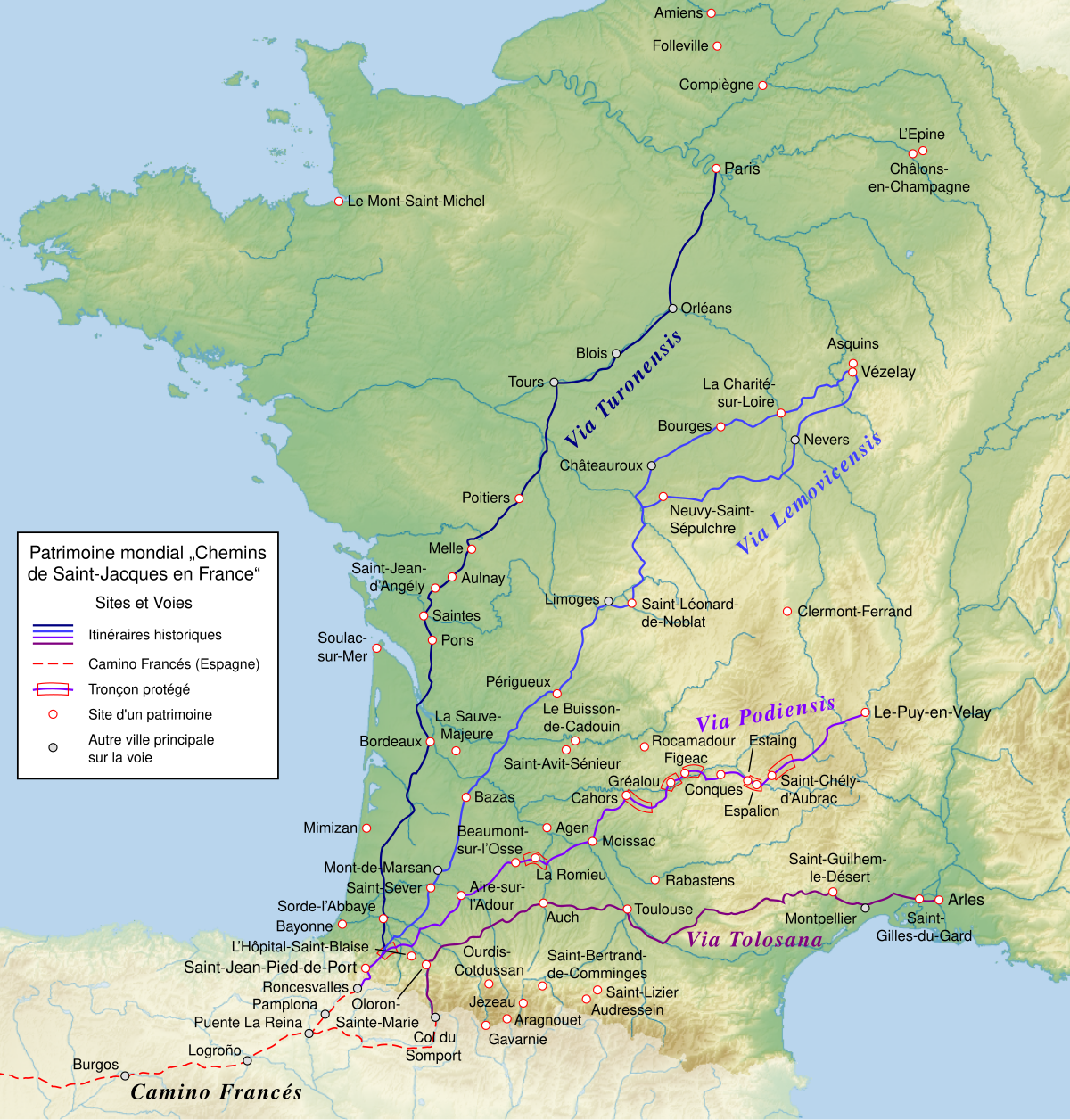


Way of Saint James UNESCO World Heritage Sites in France
Overview
The Way of Saint James, known as the Camino de Santiago, is a historic pilgrimage route that has attracted countless travelers for centuries. In France, this UNESCO World Heritage Site encompasses a series of structures and monuments that not only represent the rich history of Christian pilgrimage but also highlight the cultural and architectural diversity of the Occitania region. This pathway leads to Santiago de Compostela in Spain, where the remains of Saint James, one of Jesus’ apostles, are believed to be housed.
The French section of the pilgrimage is particularly significant, featuring a medley of churches, bridges, and towns that have flourished along the route. As you traverse this path, you will encounter ancient structures that echo the spiritual journey undertaken by pilgrims throughout history. The landscape is dotted with towns that have served as vital waypoints for travelers, each offering its own unique blend of history and culture.
Visiting the Way of Saint James is not just about the destination; it is about the journey, the stories, and the sense of community that has developed along this historic route. Whether you are a devoted pilgrim or a curious traveler, the Way of Saint James in France promises an enriching experience filled with cultural insights and historical significance.
History and Significance
The Way of Saint James has its roots in the early Middle Ages, when it became one of the most important pilgrimage routes in Christendom. Pilgrims from all over Europe traveled to Santiago de Compostela, drawn by the belief that visiting the site could bring spiritual rewards such as forgiveness of sins and divine blessings. Over the centuries, this route has evolved into a cultural phenomenon that transcends mere religious observance, fostering a sense of solidarity among travelers from diverse backgrounds.
The French section of the pilgrimage has played a crucial role in the development of European identity, as it facilitated cultural exchanges through the movement of people, ideas, and artistic influences. The traditions and practices established along the route have shaped the cultural landscape of regions through which the Way passes. The route’s significance extends beyond religion, encompassing art, architecture, and the fostering of local communities.
In 1998, the Way of Saint James was designated a UNESCO World Heritage Site due to its outstanding universal value. This recognition highlights its importance as a historic route and as a testament to the enduring human spirit of pilgrimage. The preservation of the structures along the path is essential to maintaining the legacy of the countless pilgrims who have walked this route over the centuries.
Architecture and Features
The architectural features along the Way of Saint James in France are as diverse as the regions they traverse. Pilgrims will find an array of religious buildings, bridges, and monuments that reflect the historical significance of the route. One of the key attributes of this heritage site is the Romanesque architecture commonly found in many of the churches and chapels along the path.
Among the notable structures are ancient churches adorned with intricate sculptures and frescoes that tell stories of biblical events and local legends. The Church of Saint-Jacques in the town of Saint-Jean-Pied-de-Port is a prime example, featuring a blend of Romanesque and Gothic styles that represent the artistic evolution along the route. Its welcoming façade invites pilgrims to pause and reflect.
Another remarkable feature is the numerous bridges that span rivers and valleys, facilitating the journey of pilgrims. The Pont Vieux in the town of Espalion is an iconic medieval bridge that exemplifies the engineering prowess of its time and serves as a reminder of the many pathways that have connected communities.
The combination of these architectural elements, along with the stunning natural landscapes, creates an immersive experience that encourages visitors to appreciate the craftsmanship and devotion that went into creating these structures over the centuries.
Visiting Information
Accessing the Way of Saint James in France is relatively straightforward, with numerous entry points along the route. The most popular starting point for many pilgrims is Saint-Jean-Pied-de-Port, which is well connected by public transport, including buses and trains from major French cities. Once on the route, walkers can expect well-marked paths that vary in difficulty, making it accessible for people of different fitness levels.
Check the official website for current information on hours and prices related to specific sites along the route, as these can vary. It’s recommended to allocate several days to fully experience the route, as walking portions of the Way allows for a deeper appreciation of the cultural and historical context. Most pilgrims take around 30 to 35 days to traverse the entire route from France to Santiago de Compostela, but many choose to walk only shorter sections.
The best times to visit are during spring and autumn when the weather is mild, and the landscapes are particularly beautiful. Summer can be crowded, and the heat may make walking uncomfortable, while winter conditions may render some paths impassable.
Nearby Attractions
While exploring the Way of Saint James, there are several nearby attractions worth visiting:
Saint-Jean-Pied-de-Port: This charming town serves as the starting point for many pilgrims and features the impressive Citadel, which offers panoramic views of the surrounding landscape.
Rocamadour: A stunning cliffside village known for its medieval architecture and religious significance, Rocamadour is a short detour from the pilgrimage route.
Conques: Home to the Abbey of Sainte-Foy, this picturesque village is famous for its beautiful Romanesque church and has been a resting point for pilgrims for centuries.
Figeac: Known for its historical significance and vibrant cultural scene, Figeac offers visitors the chance to explore its rich heritage, including the Champollion Museum dedicated to the decipherer of Egyptian hieroglyphs.
Sarlat-la-Canéda: A medieval town celebrated for its well-preserved architecture, Sarlat presents a delightful stop for those interested in exploring local markets and culinary delights.
Insider Tips
To enhance your experience on the Way of Saint James, consider these insider tips:
Photography: Early mornings or late afternoons provide the best light for photography, illuminating the stunning architecture and natural landscapes.
Crowd Avoidance: If possible, visit during the shoulder seasons (late spring or early autumn) to avoid the peak summer crowds and enjoy a more tranquil experience.
Stay Hydrated: Carry enough water, especially during warmer months, as some stretches may lack access to drinking water.
Practical Information
When preparing for a journey along the Way of Saint James, consider the following practical advice:
What to Bring: Comfortable walking shoes, a sturdy backpack, and weather-appropriate clothing are essential. A walking stick can also provide support on uneven terrain.
Seasonal Considerations: The weather can vary significantly, so be prepared for rain and fluctuating temperatures, particularly in spring and autumn.
Local Currency: Ensure you have local currency for purchases along the route, particularly in smaller towns where credit cards may not be accepted.
Frequently Asked Questions
How long should I spend visiting?
The time spent on the Way of Saint James can vary greatly. Many pilgrims allocate about a month to complete the entire route, but shorter sections can be walked in a few days.
Is photography allowed?
Yes, photography is generally allowed in public spaces, but be respectful of private property and religious sites where restrictions may apply.
Are there guided tours?
While many travelers prefer to explore independently, guided tours are available for those who wish for a more structured experience.
What’s the best time to visit?
The best times to walk the Way of Saint James are late spring and early autumn when the weather is mild and crowds are thinner.
Is it wheelchair accessible?
Certain sections of the Way may not be fully wheelchair accessible due to uneven terrain, so it is advisable to check specific routes beforehand.
Can I buy tickets online?
Check the official website for information on specific sites along the route, as some may offer online ticket purchases.
Are there restrooms and cafes?
Facilities vary along the route; larger towns will have restrooms and cafes, but smaller villages may have limited options.
What should I wear?
Wear comfortable, weather-appropriate clothing and sturdy shoes suitable for walking. Layers are advisable due to changing weather conditions.
Embarking on the Way of Saint James in France is an invitation to explore not just a path, but a living tapestry of history, culture, and community. Whether you are a dedicated pilgrim or a curious traveler, this journey promises discovery and reflection at every turn.
Photo Gallery
Location
More in Nouvelle-Aquitaine

amphitheatre of Bordeaux
📍 Bordeaux, France
The amphitheatre of Bordeaux is a monumental reminder of the city’s Roman past, standing as a testament to the grandeur of ancient entertainment …

Ancient Roman circus of Vienne
📍 Vienne, France
The Ancient Roman circus of Vienne is one of the most significant remnants of Roman architecture in France, providing a glimpse into the social and …

Ancient Roman sites in Sanxay
📍 Sanxay, France
Located in the picturesque region of Sanxay, France, the Ancient Roman sites provide a remarkable glimpse into the architectural and cultural …

Andone Castrum
📍 Villejoubert, France
The Andone Castrum, situated in the serene region of Villejoubert, France, stands as a significant archaeological site that reflects the military …

Archeological site of Châteauneuf-sur-Charente
📍 Châteauneuf-sur-Charente, France
Châteauneuf-sur-Charente, a charming town in southwestern France, is home to an archaeological site that offers a fascinating glimpse into the past. …
Avaricum
📍 Bourges, France
Avaricum, located near the modern city of Bourges in central France, is an archaeological site that offers a fascinating glimpse into the life of …
Burdigala
📍 Gallia Aquitania, France
Burdigala, the ancient Latin name for Bordeaux, France, serves as a remarkable archaeological site that offers visitors a glimpse into the region’s …
More UNESCO World Heritage

29th Division Memorial
📍 Beaumont-Hamel, France
The 29th Division Memorial serves as a solemn remembrance of the bravery and sacrifice of the soldiers from the 29th Division, who fought valiantly …

Beaumont-Hamel Newfoundland Memorial Park
📍 Auchonvillers, France
The Beaumont-Hamel Newfoundland Memorial Park stands as a significant tribute to the Newfoundland Regiment, which bravely fought during the Battle of …

Cathedral of Notre-Dame, Former Abbey of Saint-Rémi and Palace of Tau, Reims
📍 Reims, France
Reims, the capital of the Champagne region in northeastern France, is an important city steeped in history and culture. Among its most significant …

Memorial stones and tombs of Petit Donon
📍 Grandfontaine, France
Located in the picturesque region of Grandfontaine, the Memorial Stones and Tombs of Petit Donon are dedicated to the memory of soldiers who perished …
Monument of the Executed at Fleury-devant-Douaumont
📍 Fleury-devant-Douaumont, France
Situated in the heart of the Meuse department, the Monument of the Executed at Fleury-devant-Douaumont stands as a solemn reminder of the sacrifices …

Muslim Monument of Douaumont
📍 Fleury-devant-Douaumont, France
The Muslim Monument of Douaumont is a significant war memorial situated in the serene landscape of Fleury-devant-Douaumont, a town steeped in the …

Neuville-Saint-Vaast Czechoslovakian Cemetery
📍 Neuville-Saint-Vaast, France
The Neuville-Saint-Vaast Czechoslovakian Cemetery serves as a poignant reminder of the sacrifices made by Czechoslovak soldiers during World War I. …