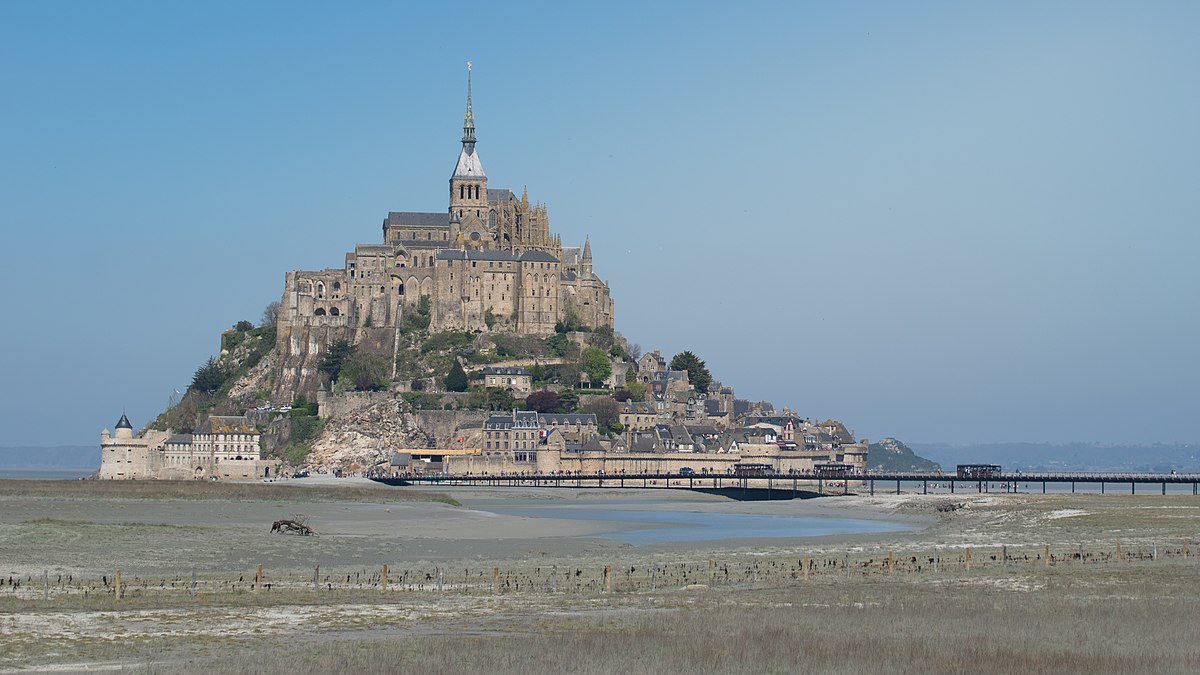

Mont-Saint-Michel and its Bay
Overview
Rising majestically from the sea, Mont-Saint-Michel is an iconic island commune located in Normandy, France. Renowned for its remarkable medieval architecture and picturesque landscape, this site has captivated visitors for centuries. The island’s unique geography, marked by the rapid ebb and flow of its bay’s tides, adds to its allure, creating an ever-changing backdrop that enhances its beauty. Mont-Saint-Michel is not only a stunning visual spectacle but also a significant cultural and religious landmark, serving as a pilgrimage site and a representation of French heritage.
The striking silhouette of the abbey perched atop the rocky outcrop against the backdrop of the ocean is one of the most photographed scenes in France. The site’s historical significance dates back to the 8th century, when it was founded as a small church dedicated to the Archangel Michael. Over the centuries, it evolved into a thriving monastic community and an important fortress during the Hundred Years’ War. Today, Mont-Saint-Michel continues to draw millions of visitors each year, offering a glimpse into its storied past while providing a serene escape into nature.
Visitors to Mont-Saint-Michel can expect a rich experience filled with history, spirituality, and stunning natural beauty. With its narrow medieval streets, charming shops, and breathtaking vistas, this UNESCO World Heritage site promises to leave a lasting impression on all who explore its hallowed grounds.
History and Significance
The history of Mont-Saint-Michel dates back to the early 8th century. Legend has it that in 708 AD, Aubert, the Bishop of Avranches, had a vision of the Archangel Michael instructing him to build a church on the rocky island. This marked the beginning of Mont-Saint-Michel as a significant religious site. Over the years, the abbey transformed into a center for pilgrimage, attracting visitors from across France and beyond.
In the following centuries, Mont-Saint-Michel became a formidable fortress. During the Hundred Years’ War between England and France, it played a critical defensive role due to its strategic location. The island’s impenetrable walls and natural surrounding waters made it a refuge against invaders. The abbey itself served both as a place of worship and a military stronghold, showcasing the dual nature of its significance.
Architecturally, Mont-Saint-Michel reflects various styles that evolved over its long history. The blend of Romanesque and Gothic elements can be seen in its structures, particularly in the grand abbey, which stands as a testament to the craftsmanship of its builders. The island has been meticulously preserved and restored, ensuring that its historical and cultural importance is recognized and maintained for future generations.
The designation of Mont-Saint-Michel as a UNESCO World Heritage site in 1979 further emphasizes its global significance. It is celebrated not just for its stunning architecture but also for its cultural landscape—the combination of the island, its buildings, and the surrounding bay creates a unique environment that is both natural and man-made.
Architecture and Features
Mont-Saint-Michel is characterized by its dramatic silhouette, dominated by the abbey that rises above the island. The abbey itself is a marvel of medieval engineering, constructed atop the rocky summit. The architecture showcases a harmonious blend of Romanesque and Gothic styles, evident in the intricate details of its stonework, pointed arches, and towering spires.
As visitors approach the island, they are greeted by the impressive ramparts that encircle the base, providing a sense of historical fortification. The narrow streets of the island are lined with charming houses and shops, many of which have retained their medieval character. The layout of the village is a testament to the island’s strategic design, with buildings constructed to maximize space and resources on the rocky terrain.
One of the most notable features of the abbey is the church itself, which is dedicated to Saint Michael. The church’s interior is equally striking, with soaring ceilings, beautiful stained glass windows, and an altar that reflects the spiritual significance of the site. The cloisters, with their peaceful gardens, provide a serene space for contemplation.
The tidal phenomenon surrounding Mont-Saint-Michel is also a significant aspect of its appeal. The bay experiences some of the highest tides in the world, with water levels varying dramatically between low and high tide. This natural rhythm adds a dynamic quality to the landscape, as the island appears to rise and fall with the water, creating a stunning visual spectacle.
Visitors will find that exploring Mont-Saint-Michel is like stepping into a living museum, where every corner reveals a story and every stone holds a piece of history. The combination of natural beauty and architectural brilliance makes it a must-visit destination.
Visiting Information
Reaching Mont-Saint-Michel is relatively straightforward. The island is accessible by road, with ample parking available nearby. Visitors often park at the designated lots and then take a shuttle bus or enjoy a scenic walk to the island, which is approximately 2.5 kilometers away. The walk offers breathtaking views of the bay and the surrounding landscape.
Check the official website for current information regarding hours and prices, as these can vary depending on the season. It is advisable to allocate at least half a day to fully explore Mont-Saint-Michel, allowing time to wander the narrow streets, visit the abbey, and take in the spectacular views from various vantage points.
The best times to visit are during the spring and fall when the weather is mild, and the crowds are generally smaller. However, the summer months are the peak tourist season, so visitors should prepare for larger crowds and longer wait times, especially during weekends and holidays.
Upon arrival, visitors can expect a vibrant atmosphere filled with tourists, local vendors, and various activities. The island offers a range of dining options, from casual cafes to more formal restaurants, where one can savor regional cuisine while enjoying the stunning views.
Nearby Attractions
Mont-Saint-Michel is surrounded by a variety of attractions that enhance the visitor experience:
Bayeux Tapestry: Located approximately 30 kilometers away, the Bayeux Tapestry is an embroidered cloth that depicts the events leading up to the Norman conquest of England. It is a UNESCO Memory of the World Register item and a must-see for history enthusiasts.
Saint-Malo: About 55 kilometers from Mont-Saint-Michel, this historic walled city offers beautiful beaches, a vibrant old town, and a rich maritime history. Visitors can explore its cobbled streets, dine on fresh seafood, and visit the impressive fortifications.
Cancale: Famous for its oysters, Cancale is a picturesque fishing village located about 40 kilometers from Mont-Saint-Michel. The coastal scenery and local seafood make it a popular destination for food lovers.
Fougères Castle: Roughly 50 kilometers away, this medieval fortress is one of the largest in Europe. Visitors can explore its impressive walls, towers, and gardens, offering insight into the region’s feudal past.
Granville: This coastal town, located about 45 kilometers from Mont-Saint-Michel, is known for its beautiful beaches and the Christian Dior Museum, dedicated to the famous fashion designer who was born here.
Insider Tips
To make the most of your visit to Mont-Saint-Michel, consider these insider tips:
Photography: Early morning or late afternoon offers the best light for photography. The golden hour enhances the island’s beauty, while fewer crowds make for cleaner shots. Be mindful of the tides when planning your photo opportunities, as the changing water levels can dramatically alter the landscape.
Crowd Avoidance: If possible, visit during the off-peak hours, especially during weekdays. Early morning or late afternoon visits can provide a more tranquil experience away from the bustling tourist crowds.
Dress Comfortably: The terrain can be uneven, so wear comfortable shoes suitable for walking. Layered clothing is advisable, as weather conditions can change rapidly.
Practical Information
When planning your visit to Mont-Saint-Michel, keep the following practical tips in mind:
What to Bring: Essential items include water, snacks, a camera, and comfortable walking shoes. A light jacket may be necessary, as coastal breezes can be chilly, even in warmer months.
Seasonal Considerations: Spring and fall are ideal for visiting, with pleasant weather and fewer tourists. Summer is popular but can be crowded. Winter visits can be magical, with a different, quieter atmosphere, though some facilities may be limited.
Dining Options: There are various dining establishments on the island, ranging from casual to more upscale options. Reservations are recommended during peak season.
Frequently Asked Questions
How long should I spend visiting?
A visit typically requires at least half a day to explore the island and abbey adequately.
Is photography allowed?
Yes, photography is permitted throughout the site, but be respectful of others and private spaces.
Are there guided tours?
Yes, guided tours are available and can provide deeper insights into the site’s history and architecture.
What’s the best time to visit?
Spring and fall are recommended for milder weather and fewer crowds, while summer is the peak season.
Is it wheelchair accessible?
Access is limited due to the island’s medieval layout, with many steps and uneven surfaces.
Can I buy tickets online?
Yes, purchasing tickets online in advance is recommended to save time and ensure entry.
Are there restrooms and cafes?
Yes, there are restrooms and various cafes available on the island, offering a selection of food and drinks.
What should I wear?
Comfortable clothing and shoes are recommended, as well as layers to accommodate changing weather conditions.
Photo Gallery
More in Auvergne-Rhône-Alpes
Abbé Jules Collin
📍 Saint-Brieuc, France
Abbé Jules Collin’s tomb is an important cultural landmark situated in the city of Saint-Brieuc, located in the Brittany region of France. The site …

abri Gay
📍 Poncin, France
The abri Gay is an archaeological site situated in the picturesque region of Poncin, France. Renowned for its extensive prehistoric artifacts, this …
Airaines Communal Cemetery
📍 Airaines, France
The Airaines Communal Cemetery, situated in the picturesque region of Somme, France, serves as a serene resting place that reflects the local history …

Alesia
📍 Alise-Sainte-Reine, France
Alesia is an archaeological site that holds immense historical significance, particularly for its role in the ancient Gallo-Roman period. Situated in …

alignements de Kerbourgnec
📍 Saint-Pierre-Quiberon, France
The alignements de Kerbourgnec is a fascinating archaeological site situated on the picturesque Quiberon Peninsula in Brittany, France. This site is …

amphitheater of Lyon
📍 1st arrondissement of Lyon, France
The amphitheater of Lyon is a striking remnant of the Roman Empire, offering a captivating glimpse into the grandeur of ancient entertainment venues. …
ancien cimetière de Basse Vallée
📍 Saint-Philippe, France
The ancien cimetière de Basse Vallée, situated in Saint-Philippe on the picturesque island of La Réunion, serves as both a final resting place and a …
More UNESCO World Heritage

29th Division Memorial
📍 Beaumont-Hamel, France
The 29th Division Memorial serves as a solemn remembrance of the bravery and sacrifice of the soldiers from the 29th Division, who fought valiantly …

Beaumont-Hamel Newfoundland Memorial Park
📍 Auchonvillers, France
The Beaumont-Hamel Newfoundland Memorial Park stands as a significant tribute to the Newfoundland Regiment, which bravely fought during the Battle of …

Cathedral of Notre-Dame, Former Abbey of Saint-Rémi and Palace of Tau, Reims
📍 Reims, France
Reims, the capital of the Champagne region in northeastern France, is an important city steeped in history and culture. Among its most significant …

Memorial stones and tombs of Petit Donon
📍 Grandfontaine, France
Located in the picturesque region of Grandfontaine, the Memorial Stones and Tombs of Petit Donon are dedicated to the memory of soldiers who perished …
Monument of the Executed at Fleury-devant-Douaumont
📍 Fleury-devant-Douaumont, France
Situated in the heart of the Meuse department, the Monument of the Executed at Fleury-devant-Douaumont stands as a solemn reminder of the sacrifices …

Muslim Monument of Douaumont
📍 Fleury-devant-Douaumont, France
The Muslim Monument of Douaumont is a significant war memorial situated in the serene landscape of Fleury-devant-Douaumont, a town steeped in the …

Neuville-Saint-Vaast Czechoslovakian Cemetery
📍 Neuville-Saint-Vaast, France
The Neuville-Saint-Vaast Czechoslovakian Cemetery serves as a poignant reminder of the sacrifices made by Czechoslovak soldiers during World War I. …