


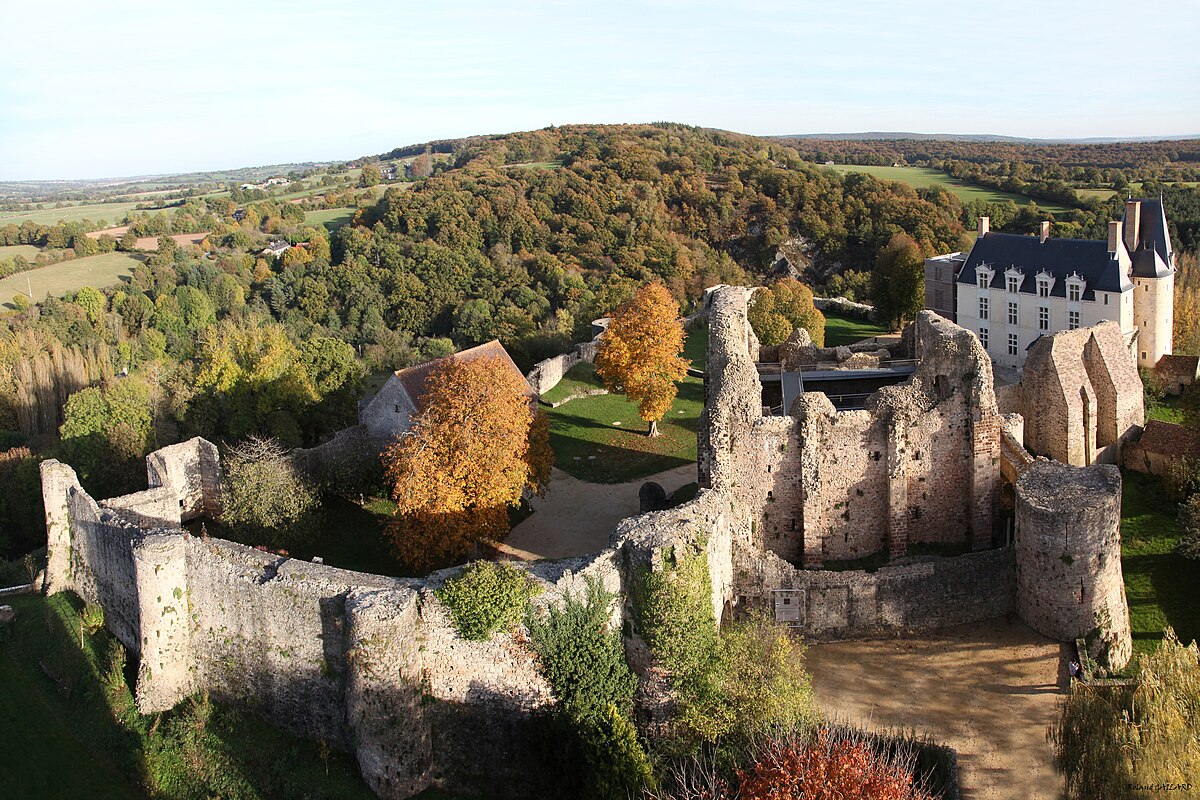


Château de Sainte-Suzanne
Overview
Perched on a rocky outcrop overlooking the picturesque village of Sainte-Suzanne-et-Chammes, the Château de Sainte-Suzanne is a striking example of medieval military architecture. It is enveloped by the lush landscapes of the Mayenne department in northwestern France, a region known for its charming countryside and historical significance. The castle, with its impressive stone walls and commanding towers, not only reflects the military prowess of the past but also serves as a cultural landmark that attracts history enthusiasts and casual visitors alike.
The site holds a unique place in French heritage, representing a blend of artistic architecture and historical narratives conveyed through its stone structures. The castle’s strategic position made it a pivotal stronghold during various conflicts, and its preservation allows visitors to gain insight into the medieval era. As a designated historical monument, Château de Sainte-Suzanne offers a captivating exploration of its storied past, reinforced through its architecture and the legends surrounding it. Visitors can expect to immerse themselves in the ambiance of a bygone era, enhanced by the surrounding natural beauty and quaint village.
History and Significance
The history of Château de Sainte-Suzanne is intertwined with the broader narrative of medieval France. While specific dates are not documented, the castle is believed to have been established in the early medieval period, serving as a fortress to protect the region from invasions and conflicts. Its strategic location allowed it to oversee the surrounding landscape, making it an important stronghold during various regional disputes.
Throughout the centuries, Sainte-Suzanne witnessed significant events that shaped its legacy. The castle’s fortifications were adapted and expanded, reflecting the evolving military architecture of the time. It played a vital role during the Hundred Years’ War, a series of conflicts between England and France, and later became a refuge for locals during times of unrest.
The cultural significance of Château de Sainte-Suzanne extends beyond its military past. It has been a gathering point for local communities, and its presence has inspired various legends and stories that are part of the region’s folklore. The castle’s preservation as a historical monument ensures that future generations can appreciate its architectural integrity and the heritage it represents.
Today, the castle stands as a testament to the resilience of history, inviting visitors to explore its grounds and learn about the lives of those who once inhabited this imposing structure. The castle’s role in history, combined with its architectural beauty, makes it a significant site for understanding the medieval era in France.
Architecture and Features
Château de Sainte-Suzanne is characterized by its robust stone construction and defensive features that reflect the architectural styles of the medieval period. The castle is encircled by imposing ramparts, which served both as fortifications and as a deterrent against potential invaders. The thick walls are complemented by a series of towers, each with its own unique design that contributes to the overall silhouette of the castle against the skyline.
The main entrance to the castle is marked by a grand gatehouse, which features intricate stonework and provides access to the inner courtyard. Inside, visitors can explore various rooms and chambers that once served as living quarters, storage areas, and places of defense. The layout of the castle is emblematic of its dual purpose as a residence and a military stronghold, highlighting the need for both comfort and security.
One of the noteworthy aspects of the castle is its panoramic vantage points, which offer views of the surrounding countryside. These elevated positions not only served defensive purposes but also allowed inhabitants to keep watch over the lands for potential threats. The architecture of the castle is a fine example of medieval design, with elements that have been remarkably well-preserved, allowing for an authentic glimpse into the past.
As visitors wander through the castle’s grounds, they can appreciate the craftsmanship that went into its construction, from the elaborate stone carvings to the strategic placement of windows that provide light and visibility. The combination of defensive architecture and domestic spaces creates a complex narrative of life within the castle, making it a fascinating site for exploration.
Visiting Information
Visiting the Château de Sainte-Suzanne offers an enriching experience for those interested in history and architecture. To reach the castle, visitors can drive to Sainte-Suzanne-et-Chammes, where ample parking is available nearby. Public transport options may be limited, so checking the official website for current transportation details is advisable.
The castle is open to visitors, but hours of operation and ticket prices can vary, so it is essential to consult the official website for the most up-to-date information. Expect to spend around one to two hours exploring the castle and its grounds, which provides sufficient time to appreciate the architecture and soak in the historical atmosphere.
The best times to visit are during the spring and early autumn months when the weather is mild, and the surrounding natural beauty is in full bloom. While summer can be a popular time for tourists, visiting during less crowded periods may enhance the experience, allowing for a more personal connection with the site.
As part of the visit, guests can often find informative displays and guides that provide context to the castle’s history and architecture, enriching their understanding of the site.
Nearby Attractions
Sainte-Suzanne Village: The quaint village surrounding the castle offers charming streets, local shops, and cafés, perfect for a leisurely stroll and a taste of local life.
La Vallée des Grottes: A nearby natural attraction featuring caves and rock formations, ideal for nature enthusiasts and those interested in geology.
Château de Laval: Located nearby, this castle offers additional insight into medieval architecture and is surrounded by its own beautiful gardens.
Église Sainte-Suzanne: A historic church located within the village, showcasing stunning architecture and providing a glimpse into the local religious heritage.
Parc Naturel Régional Normandie-Maine: This regional park encompasses beautiful landscapes and outdoor activities, perfect for hiking and exploring the natural environment of the area.
Insider Tips
To capture the essence of the Château de Sainte-Suzanne, consider visiting early in the morning or later in the afternoon for softer lighting, which is ideal for photography. The castle’s towers and ramparts provide excellent vantage points for panoramic shots of the surrounding landscape.
To avoid crowds, plan your visit during weekdays rather than weekends, especially during peak tourist seasons. Exploring the castle at a quieter time can enhance your experience and allow for a more intimate exploration of the site’s features.
Be sure to engage with the informative displays and any available guides, as they can provide valuable insights and stories that enrich your visit.
Practical Information
When visiting Château de Sainte-Suzanne, it is advisable to wear comfortable shoes, as the cobbled pathways and uneven terrain may require some careful navigation. Bring a bottle of water and snacks, particularly if you plan to spend an extended period exploring the castle and its surroundings.
Seasonal considerations are important; during the winter months, the weather can be chilly and wet, so dress appropriately for the conditions. In contrast, summer months can be warm, so lightweight clothing and sun protection are recommended.
Finally, be sure to check for any special events or exhibitions that may be taking place during your visit, as these can enhance your experience and provide additional context to the castle’s history.
Frequently Asked Questions
How long should I spend visiting?
A visit typically takes around one to two hours, allowing time to explore the castle and its grounds.
Is photography allowed?
Yes, photography is permitted, so feel free to capture the stunning architecture and views.
Are there guided tours?
Guided tours may be available; check the official website for details on scheduling and availability.
What’s the best time to visit?
The best times are during spring and early autumn for mild weather and fewer crowds.
Is it wheelchair accessible?
Accessibility information may vary, so check the official website for specific details.
Can I buy tickets online?
Please consult the official website for information on ticket purchasing options.
Are there restrooms and cafes?
Facilities may be available on-site; check the official website for specifics.
What should I wear?
Dress comfortably and appropriately for the weather, as conditions can change. Wear sturdy shoes for exploring the castle grounds.
Photo Gallery
More in Auvergne-Rhône-Alpes
Abbé Jules Collin
📍 Saint-Brieuc, France
Abbé Jules Collin’s tomb is an important cultural landmark situated in the city of Saint-Brieuc, located in the Brittany region of France. The site …

abri Gay
📍 Poncin, France
The abri Gay is an archaeological site situated in the picturesque region of Poncin, France. Renowned for its extensive prehistoric artifacts, this …
Airaines Communal Cemetery
📍 Airaines, France
The Airaines Communal Cemetery, situated in the picturesque region of Somme, France, serves as a serene resting place that reflects the local history …

Alesia
📍 Alise-Sainte-Reine, France
Alesia is an archaeological site that holds immense historical significance, particularly for its role in the ancient Gallo-Roman period. Situated in …

alignements de Kerbourgnec
📍 Saint-Pierre-Quiberon, France
The alignements de Kerbourgnec is a fascinating archaeological site situated on the picturesque Quiberon Peninsula in Brittany, France. This site is …

amphitheater of Lyon
📍 1st arrondissement of Lyon, France
The amphitheater of Lyon is a striking remnant of the Roman Empire, offering a captivating glimpse into the grandeur of ancient entertainment venues. …
ancien cimetière de Basse Vallée
📍 Saint-Philippe, France
The ancien cimetière de Basse Vallée, situated in Saint-Philippe on the picturesque island of La Réunion, serves as both a final resting place and a …
More Castles & Palaces
Château d'Artois
📍 La Châtelaine, France
Château d’Artois stands as a remarkable example of French castle architecture, nestled in the serene region of La Châtelaine. With its storied past …

Château de Langin
📍 Bons-en-Chablais, France
The Château de Langin, perched in the scenic region of Bons-en-Chablais, France, is a remarkable example of medieval architecture that attracts …

Château de Montaigu (Saône-et-Loire)
📍 Mercurey, France
The Château de Montaigu, situated in the picturesque region of Mercurey in Saône-et-Loire, France, offers visitors a glimpse into the architectural …
Château de Montfalcon
📍 La Biolle, France
Château de Montfalcon is an impressive castle that reflects the historical depth and architectural beauty of the region of La Biolle, France. Situated …

Château de Montrognon
📍 Ceyrat, France
The Château de Montrognon is a captivating castle that reflects the essence of French heritage and medieval architecture. Situated in the charming …

Château de Noyers-sur-Serein
📍 Noyers, France
The Château de Noyers-sur-Serein is an exquisite example of medieval architecture that captivates visitors with its historical significance and …
Château de Quirieu
📍 Bouvesse-Quirieu, France
The Château de Quirieu is a remarkable example of French castle architecture nestled in the charming region of Bouvesse-Quirieu. This castle, while …